The Ultimate Beginner’s Guide to Barcelona
Barcelona offers the perfect blend of beach and vibrant city life, along with an impressive mix of architecture, history, and culture. For this reason, many people head to the Catalan capital for both city breaks and summer holidays, as there’s plenty to see and do no matter the time of year. For those who have never been to Barcelona before, it can sometimes be hard to decide where to go and what to see—so we’ve put together a detailed beginner’s guide to help you make the most of your trip!
Getting Around the City
Figuring out public transport in a city you don’t know very well can sometimes feel a bit overwhelming, but Barcelona is known for its excellent transport connections that can take you wherever you need to go! TMB is the city’s main public transport operator, running both the bus and metro networks.
Metro
The most widely used form of public transport in Barcelona is, without a doubt, the underground metro system. The Barcelona Metro has 12 lines with hundreds of stops across the city, making it quick, easy, and affordable to reach virtually any neighbourhood.
It’s especially helpful to be aware of the Metro’s closing times. The usual schedule runs from Sunday to Thursday from 5:00 am to midnight. On Fridays, services operate from 5:00 am until 2:00 am, while on Saturdays the metro runs all night, making it a very convenient option if you’re heading home late or travelling to and from the airport. Tickets can be purchased from the machines at any metro station. We recommend buying a T-Casual travel card, which gives you 10 journeys for €13!
Bus
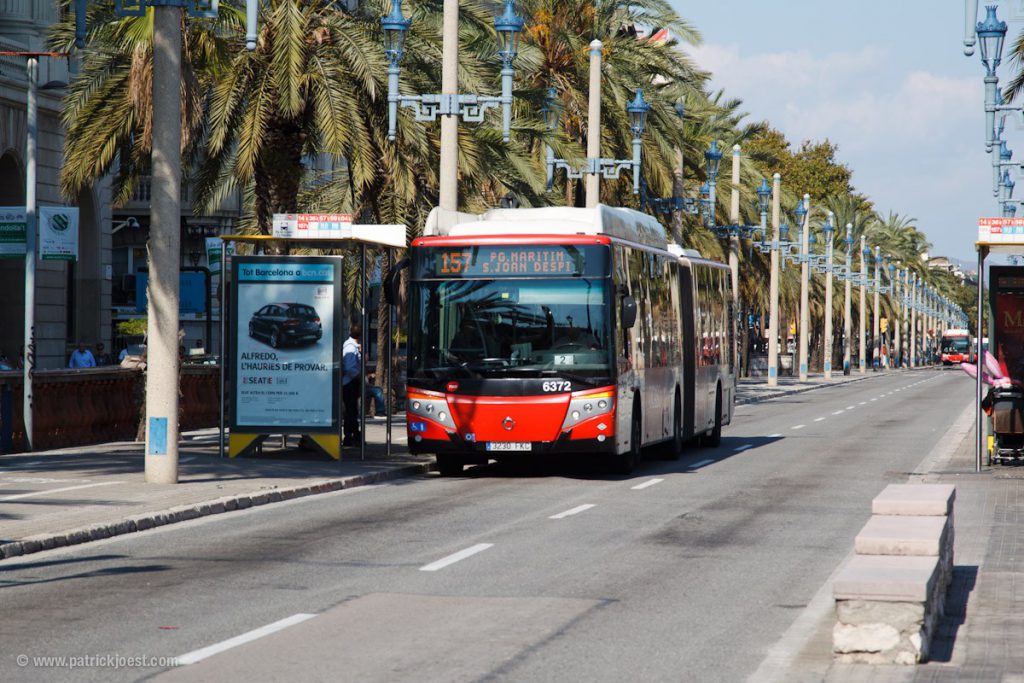
An affordable and convenient way to get around Barcelona is by bus. With more than 100 routes covering the city and its surrounding areas, hopping on a bus in the Catalan capital will definitely get you wherever you need to go.
On the TMB website, you can use the “Plan your journey” tool to enter your starting point and destination, and the site will show you how to get from A to B by bus, metro, or a combination of both. When travelling by bus, T-Casual travel cards can also be used, although other ticket options are available. Simply make sure it’s the right bus by checking the route map displayed at the bus stop, hop on, and validate your ticket using the onboard reader. Then all you have to do is sit back and enjoy the city views—but don’t forget to press the stop button in time for your stop!
TMB also offers a convenient night bus service (NitBus) that operates from 10:00 pm to 6:00 am across the city. Many routes pass through Plaça Catalunya and the city centre, making it a great option for those staying in central Barcelona.
Other Options – Taxi, Train, On Foot, or By Bike
Barcelona also offers plenty of other ways to get around the city, such as by taxi or train. However, exploring on foot is often one of the best ways to truly experience the city, especially in neighbourhoods like the Gothic Quarter or El Born, with their winding streets where you can easily spend hours wandering. If you’re worried about getting lost, many companies offer guided walking tours, giving you the chance to see the city from different perspectives. These tours can be tailored to your interests, whether that’s food and drink, architecture, culture, art, or anything else. So while Barcelona boasts excellent public transport connections, make sure to set aside some time to enjoy a stroll around the city!
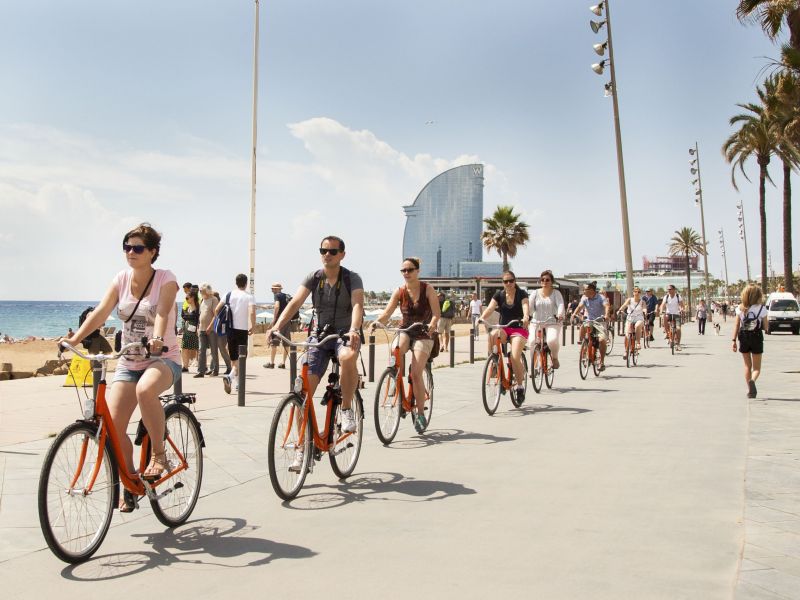
Cycling is another fantastic way to explore the city and, luckily, there are bike rental shops on almost every corner! Barcelona is one of Europe’s most bike-friendly cities, so there’s no need to worry. With miles and miles of dedicated cycle lanes, you’ll be all set to get around with ease.
Best Restaurants
Barcelona is home to thousands of amazing restaurants serving all kinds of cuisine, which can sometimes make it hard to decide where to eat. Take a look at some of our Barcelona dining guides to help you choose—you won’t be disappointed!
- Tapas
- Italian
- Mexican
- Curry
- Seafood/Paella
- Street Food
- Asiático
- Michelin-Starred Restaurants
- Vegetarian and Vegan
- Indian
Top Attractions
Sagrada Família
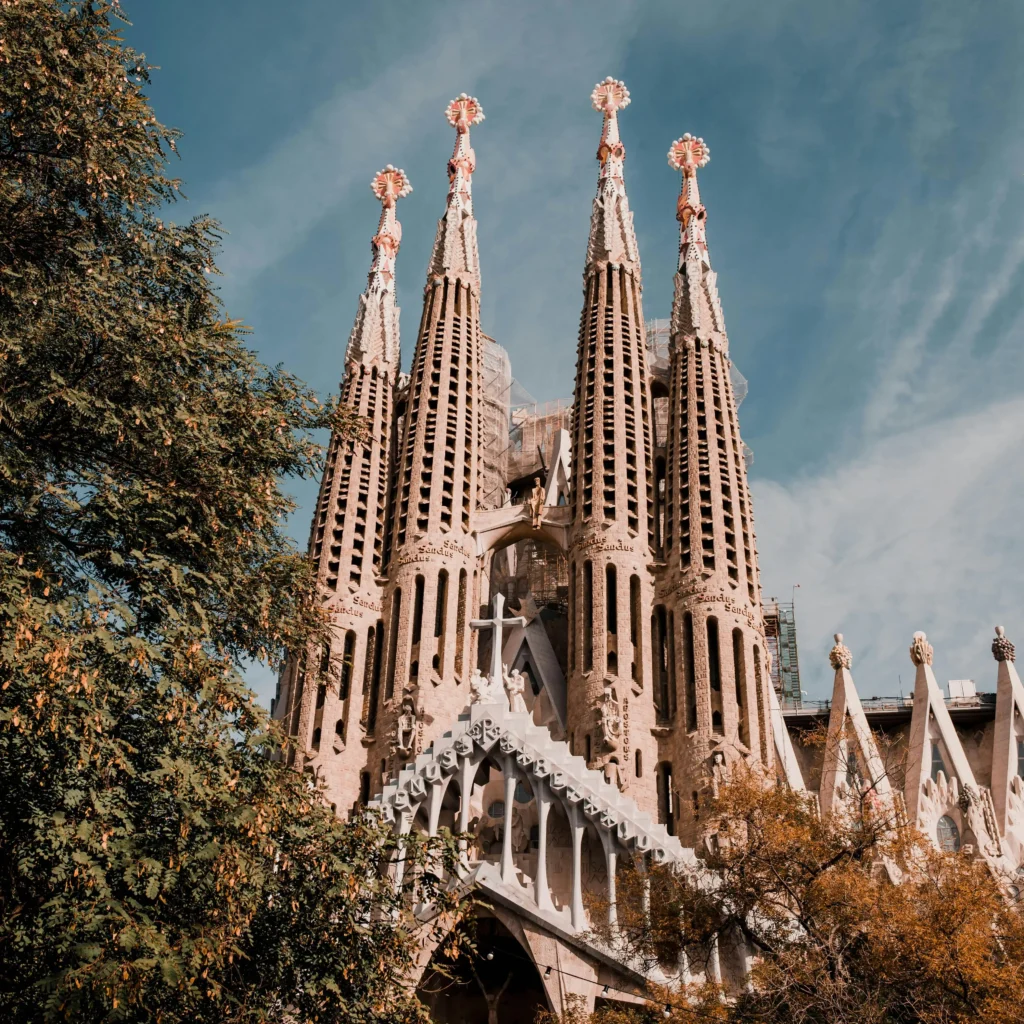
It goes without saying that the Sagrada Familia should be at the very top of your Barcelona bucket list. This iconic masterpiece by Antoni Gaudí is arguably the city’s most famous tourist attraction, not only because of its impressive size, unique design, and striking Modernist features, but also because it has been under construction for more than 130 years—longer than it took to build the Egyptian pyramids!
Tip: book your tickets in advance to skip the queues and grab the audio guide for the best experience.
Metro: Sagrada Familia (L2)
Camp Nou
Whether you consider yourself a die-hard Barça fan or simply want to visit what many people regard as the best stadium in Europe, a trip to Camp Nou is a must in a city where football is almost a religion. The ‘Camp Nou Experience’ starts in the away team’s dressing room, takes visitors through the players’ tunnel, and out onto the pitch… So what are you waiting for?
Tip: try to catch a Barça match at Camp Nou. The atmosphere is absolutely electric!
Metro: Collblanc (L5) or Les Corts (L3)
Park Güell
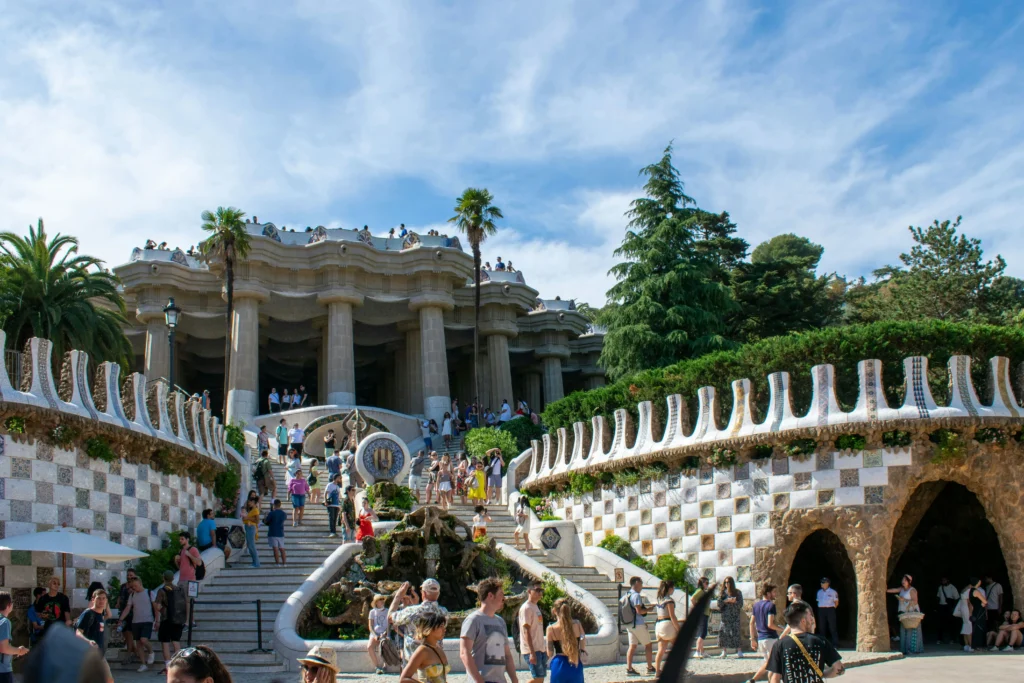
A visit to Park Güell offers the perfect escape from the hustle and bustle of the city centre, with stunning views over the Mediterranean Sea and the Barcelona skyline. From the moment you step inside the park, it’s clear you’ve entered Gaudí’s world, thanks to the colourful mosaics, quirky architectural details, and the overall natural feel throughout—this is one attraction you simply can’t miss!
Tip: book your tickets in advance, as entry times to Park Güell are limited.
Metro: Lesseps or Vallcarca (L3)
La Rambla
Perhaps one of the most famous spots in Barcelona, La Rambla is another must-see in the city. Known for its many trees and flower stalls, as well as the iconic La Boquería Market, you’ll also find popular shops here, including the Nike, H&M and Mango stores. What’s more, walking down La Rambla from Plaça de Catalunya takes you all the way to the Columbus Monument and Port Vell. A fun fact about La Rambla is that it’s not just one street—it’s actually a combination of five smaller streets, which is why it’s often referred to in the plural as ‘Las Ramblas’.
Important tip: watch out for pickpockets on La Rambla, as this area gets very crowded, especially during the summer season.
Metro: Liceu (L3) or Catalunya (L1, L3)
Casa Batlló
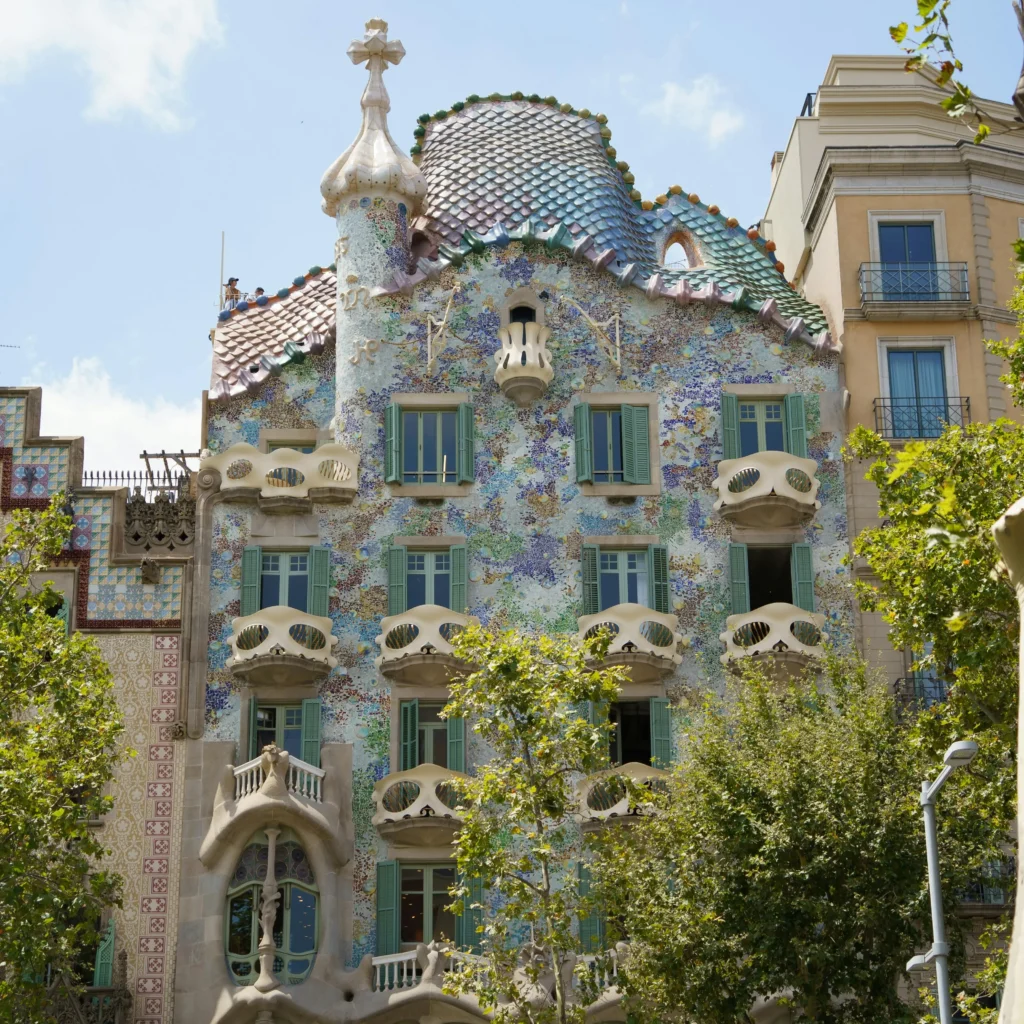
Located on the famous Passeig de Gràcia, next to Casa Amatller, Casa Batlló is a UNESCO World Heritage Site designed by Gaudí. It stands out for its skeletal-like structure, colourful façade, and curved rooftop. We guarantee it’s unlike anything else you’ll see in the city!
Tip: during the summer season, book your ticket for Casa Batlló’s “Magic Nights” and enjoy live music and drinks on the rooftop.
Metro: Passeig de Gràcia (L2, L3, L4)
Other Places to Visit
Casa Vicens
Located in Gràcia, this unique building is known for its bold, vibrant colours (mainly green, red, and white) and floral-patterned tiles decorated with yellow flowers and buds. It was built using red brick, stone, and vivid ceramic tiles, drawing inspiration from Oriental styles. The interior of this colourful landmark opened to the public in November 2017, so make sure to add it to your Barcelona itinerary!
Tip: the last entry to Casa Vicens is at 6:30 pm, so make sure to arrive in good time.
Metro: Fontana (L3)
Beaches
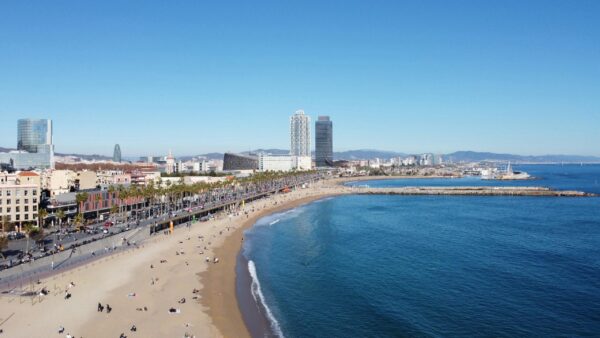
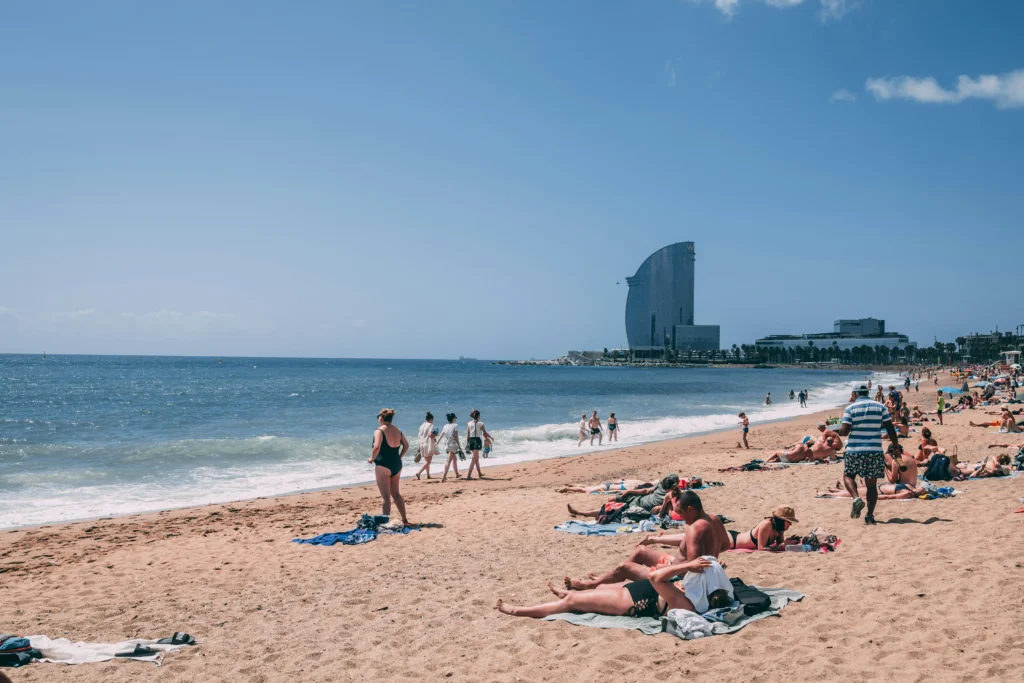
What’s a trip to Barcelona without a day at the beach? This coastal city boasts miles of sandy shoreline where you can relax, enjoy a picnic, take a refreshing dip, or simply soak up the sun.
Tip: head to the beaches in the northern part of the city, such as Nova Icaria or Bogatell, to avoid the larger tourist crowds.
Metro:
Barceloneta (L4) – for Barceloneta Beach
Llacuna (L4) – for Bogatell Beach
Ciutadella Vila Olímpica (L4) – for Nova Icaria Beach
Poble Espanyol
Poble Espanyol is an open-air architectural museum featuring winding streets, charming squares, façades, and buildings inspired by different autonomous communities and provinces across Spain. Located on Montjuïc, it’s the perfect spot to explore on a warm, sunny day.
Tip: Poble Espanyol hosts many major events throughout the year, so check out their website before you go to see if there’s anything that catches your eye.
Metro: Espanya (L3, L1)
The Best Views in Barcelona
Barcelona is known for its many scenic spots offering panoramic views of the city. Here are just a few of our favourites!
Búnkers del Carmel
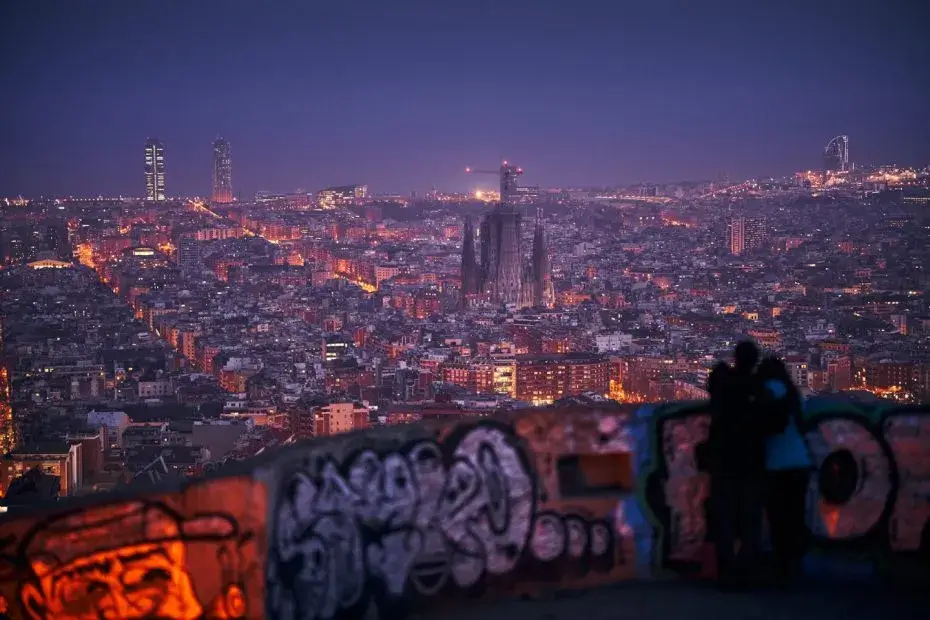
The Bunkers del Carmel, also known as Turó de la Rovira, sit 262 metres above sea level and are one of the few spots offering 360-degree views over Barcelona. This site is a former military base originally built during the Spanish Civil War to detect and defend against enemy aircraft during Franco’s regime. To reach the bunkers, you can take the metro; however, this involves a 20-minute uphill walk to the top. Several buses, including lines 22 and 24, will take you closer to the summit so you won’t have to walk as far.
Tip: arrive at the Bunkers early enough to grab a good spot and enjoy the sunset.
Metro: El Carmel (L5)
Montjuïc
Montjuïc hill offers even more stunning viewpoints over Barcelona. From Montjuïc Castle at the top, you can enjoy sweeping views of the city’s buildings, the port, and the sea. In addition, the façade of the MNAC (Museu Nacional d’Art de Catalunya) overlooks the Magic Fountain of Montjuïc, Plaça d’Espanya, and the Collserola mountain range.
Tip: take the Montjuïc cable car for some of the best views over the city.
Metro: Espanya (L3, L1)
Tibidabo
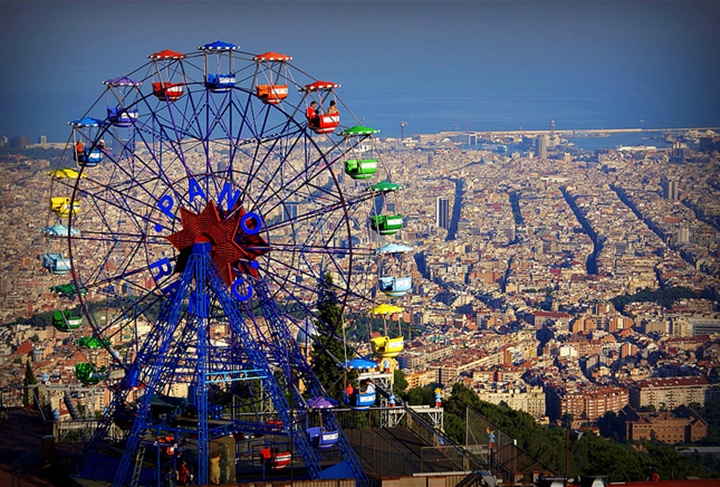
Tibidabo is part of the Serra de Collserola and is also Barcelona’s highest mountain, standing at 512 metres. At the top, you’ll find an amusement park and the Sagrat Cor Church, which can be seen illuminated from across the city at night. Tibidabo offers breathtaking views over Barcelona at any time of day. However, we wouldn’t recommend taking the metro all the way there, as there are no stations close to the mountain.
Tip: the Ferris wheel at the top of the mountain offers an even better and truly unique view of the city.
Bus: T2A Bus from Plaça de Catalunya
Barcelona Neighbourhood Guide
It’s important to keep Barcelona’s different neighbourhoods and areas in mind, as the best place to stay can vary depending on what you’re looking to get out of your trip.
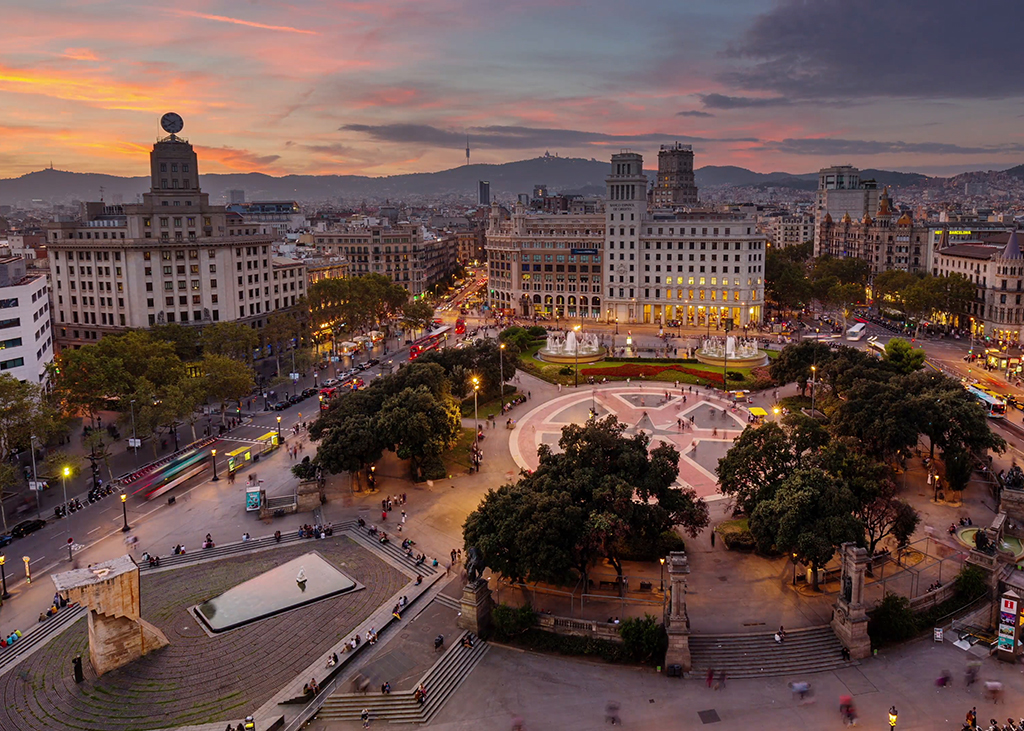
Plaça Catalunya
It’s important to keep Barcelona’s different neighbourhoods and areas in mind, as the best place to stay can vary depending on what you’re looking to get out of your trip.
Gràcia
Gràcia is a great option for those who want to stay close to the city centre, but not right in the heart of it. It’s also a good choice if you’d like to be closer to Park Güell and the Bunkers del Carmel.
El Raval
Part of the Old Town (Ciutat Vella), this lively neighbourhood is popular with students, as it’s located very close to the main building of the University of Barcelona.
Gòtic
The Gothic Quarter is located in the heart of the city, as it was once “the original Barcelona” where the city began before the Eixample was built. This area is known for its narrow, winding streets, charming architecture, and numerous lively restaurants and cafés.
Eixample
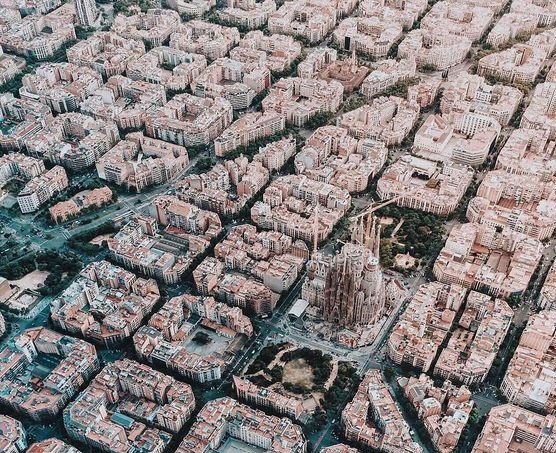
Divided into different areas, the Eixample is the largest neighbourhood in Barcelona. Areas such as Sagrada Familia and Fort Pienc are part of Eixample due to its vast size. Eixample Dreta (right) is perfect for those who want to be close to Passeig de Gràcia and the main city centre, while Eixample Esquerra (left) is home to the main University of Barcelona, shopping streets, and Mercat de Sant Antoni. The area between Ronda Sant Antoni and Ronda Universitat is known as the “Gaixample,” dominated by LGBT bars and restaurants.
Barceloneta
This area is home to Barcelona’s closest beach to the city centre. Barceloneta is a popular neighbourhood for those who want to be near the beach while still having easy access to the city centre.
Poble Sec
Poble Sec isn’t home to many major tourist attractions, but it’s a great place to stay since it’s only 10 minutes by metro from the city centre. There are also plenty of restaurants and bars, including Carrer de Blai, famous for its delicious pintxos and tapas.
El Born/La Ribera
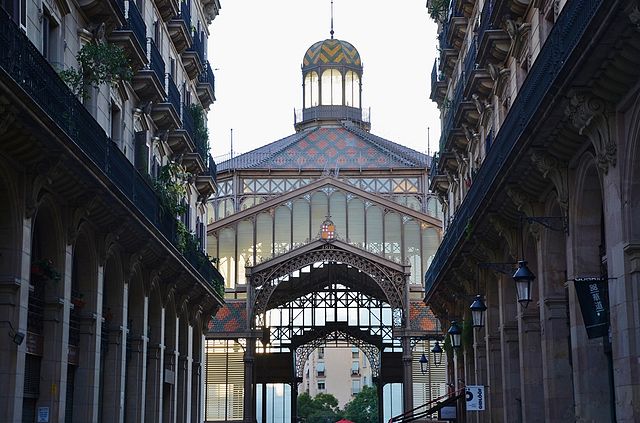
Also part of Ciutat Vella, El Born offers culture, traditional buildings, and is within walking distance of the rest of the city centre and the beach. It’s also known for its abundance of restaurants, bars, and cafés.
Poblenou
Known by some as the “Catalan Manchester” due to its industrial history, Poblenou is a district filled with new hotels, shopping centres, office buildings, and restaurants. This neighbourhood also has its own beaches, which are often less crowded than Barceloneta.
Sants
Sants is a residential area of Barcelona and doesn’t usually have many tourist attractions. However, its ease of access to key areas is a major plus, and one of Barcelona’s main train stations is located here.
So now that you know Barcelona like the back of your hand, feel at home during your city break or holiday in Barcelona by staying in a central apartment.